The week before last, I was on my way back from a vacation in Switzerland. I was fortunate enough to have United business class for the nearly 12-hour flight. I’ve done plenty of long flights in coach, many for Cisco, including several 15-hour trips to Singapore and Australia. I can’t stand sitting still on a barely cushioned plank for that long. The change in my job here means I don’t travel much for work outside of Cisco Live, which is frankly good. I despise crossing time zones, and the older I get, the harder I find it to get my sleep back on schedule. I have severe insomnia to begin with. I often go several days sleeping 1-4 hours a night, and then finally crash for 10 hours. A nine hour time change really doesn’t help this at all, but in some ways it shouldn’t bother me because it’s more of the same.
Anyways, because I had business class I had access to the Swiss Air lounge before my flight. We had a longish drive from the breathtaking Bürgenstock resort to Zurich, and we arrived quite early so we could return the car with ample time. Lounges are a nice perk in these circumstances.

Anyways (x2), I was going to grab a cup of coffee in the lounge and whom do I see, but Rami Rahim, former CEO of Juniper Networks, and now EVP of HPE.
I looked at him and said, perhaps a bit obviously: “Rami Rahim?” He glanced up with a slightly annoyed look on his face.
“Yes,” he replied.
“I used to work at Juniper!” I told him.
“Oh,” he replied.
“Now I work for Cisco.”
“Ungh,” he said.
It was really a good conversation, I think. Very enlightening and engaging. I wasn’t quite able to sneak my name in to ask for a job, though. I need to be more bold.
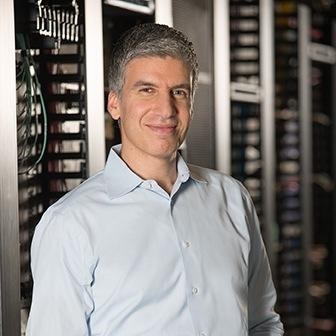
The funny thing is, in my six years at Juniper I met Rami once. I had given my two weeks notice and was expecting to be walked out the door since I was going to Cisco. Instead, my boss asked me to stay on for the two weeks to tie up some loose ends. I was flattered that they (correctly) trusted me enough to keep me onboard with full access to Juniper’s confidential data. (I consider my employer’s data to be sacrosanct, not only in principle, but also because if I betray trust, I’ll never work in this industry again.)
I was called to a meeting the Wednesday before I left. There was some new, highly secret product Juniper was developing. I honestly don’t remember what it was. Recall that I worked in IT, and part of our job was implementing Juniper products on our internal network. In this meeting were a few people from IT, a couple of product managers, and lo and behold, Juniper’s CEO, Rami. I’m pretty sure he didn’t know I was going to Cisco in two days!
Rami was the successor CEO to a fellow named Shaygan, who was the successor to Kevin Johnson. Suffice it to say, I was not a big fan of Kevin, who was one of those execs who sets lofty goals disconnected from reality and holds big pep rallies, only to skedaddle when the goals aren’t realized. (“We’ll be the next $10 billion company!”, he said in 2010.) I never really understood what happened with poor Shaygan, who was at Juniper less than a year, but when Rami came in, there was universal elation among the rank and file. Rami grew up with the company and came from an engineering background. He knew Juniper and he knew networking. I think boards of directors often forget how important this, oddly. Across the corporate world, in the tech industry but also beyond, we see executives put in senior positions who have no actual knowledge of the business they’re leading. They just know “management” or “product” or have “executive presence”, and so it’s believed they will be able to lead any company, whether the company manufactures airplanes or paper clips.
Rami knew the business and he knew the customers. He could inspire the employees. I think his tenure as CEO was an indisputably good one, and I’m sure he’s doing well at HPE.
As for our conversation, I don’t blame him for his brevity. I personally wouldn’t like to be accosted by strangers before getting on a 12-hour flight. Also, tech executives (and senior executives in general) have increasingly come under threat of physical assault, so random people walking up to you, even in an airport, is probably a little concerning.
As for my job, I guess I’ll have to hang around Cisco a little longer.